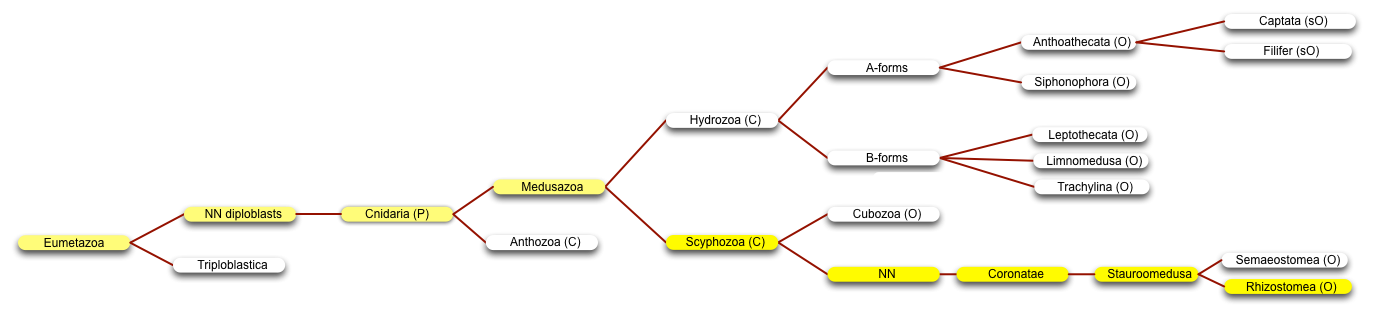
Medusozoa
Class Scyphozoa* (Cnidarians with complex medusoid stages usually with reduced polys)
- Order Semaeostomeae* (Scyphomedusa with bowl-shaped or saucer- shaped bells having scalloped margins. Manubrium divided into four oral arms. Gastrovascular cavity with radial canals or channels extending from the central stomach to the bell margin. Throughout the oceans of the world. Cyanea*, Pelagia, Aurelia*, Chryssasora, Stygiomedusa)
- Order Rhizostomeae* (Bell of medusa lacking tentacles. Oral arms of manubrium branched and bearing deep folds into which food is passed. Folds or secondary mouths lead into arm canals of manubrium, which pass into the stomach. Original mouth lost through fusion of oral arms, except in Stomolophus. Mostly tropical and subtropical shallow seas. Cassiopea, Rhizostoma, Mastigias, Stomolophus)
- Order Stauromedusae (Sessilpolypoidid scyphozoans attached by a stalk on the aboral side of the trumpet shaped body Halicystus, Craterolophus, Lucernaria
- Order Cubozoa (Sea wasps and box jellyfish, Medusoid cnidarians with bells having four flattened sides. Bell margin simple and bearing four tentacles or tentacular clusters. The possession of a velum, the nature of their nematocysts, and their life cycle separate them from the Scyphozoa which the resemble. An attached polypoidid larvae follows the planula. Tropical and subtropical seas. Carybdea, Chirosalmus, Chironex.)
Class Hydrozoa* (Hydroids - Cnidarians with simple medusa and a usually dominant polyp) A forms Atheacate polyps budding from axial polyps, tall medusa with oceli and manubrial gonads
- Order Anthoathecate (Anthomedusa)* Skeletal covering when present does not surround the hydranth. Free medusa which are tall and bell shaped, are commonly present. Bougainvilla, Calycopsis, , Pennaria*, Syncoryne, Eudendrium,, Polyorchis, and Hydra)
- Order Siphonophora* (Pelagic Hydrozoan colonies of both polypoid and medusoid individuals. Colonies with floats or large swimming bells. Largely in warm seas, Most have a gas filled flotation zoic. (Physalia*, Stephalia, Nectalia)
- Order Chondrophora Enigmatic group either colony or highly specialized individual. Polypoids attached to a multi chambered chitinous float. Pelagic; (Velella, Porpita)
- Order Leptothecatae (Leptomedusa). Polyps always colonial, Hydranth surrounded by a skeleton. Free medusa are commonly absent, but when present are more or less flattened. Abietinaria, Aequorea, Bonneviella, Cuvieria, Eucheilota, Lovenella, Lytocarpus, Obelia*, Plumularia*, Sertularia*, Campanularia*, Abietinaria, Aglaophenia)
- Order Trachymedusa* (Medusoid hydrozoans lacking a polypoid stage. Medusa develop directly from an actinula. Liriope, Aegina, Botrynema, Craspedacusta, Gonionemus*, Polypodium, Rhopalonema, Solmissus.) Order
- Order Milleporina* (Stinging, or fire, coral. Skeleton covered by only by a thin epidermal layer. Defensive polyps arising from separate pores encircling a central gastrozoid. Millipora* is the only genus.
- Order Stylasterina* (A thick layer of tissue overlying skeleton. Defensive and feeding polyps located within star shaped openings in the skeleton. calcarious styles arise from the base of the polyp cups. Stylaster*
September 29, 2013